
The landscape changes quickly around sunrise, so avoid spending the entire experience trying to capture one perfect image.
At the sunrise viewpoint, photograph both the horizon and the wider caldera landscape.
When you reach the lava fields, look for the contrast between the dark volcanic ground, the jeep, Mount Batur, morning light, and human scale.
A wide-angle phone camera is often enough for the larger landscapes.
If photography is particularly important to you, tell the driver-guide early.
Local drivers are familiar with commonly used photo locations, although stopping opportunities depend on the route, traffic, terrain, and current local conditions.
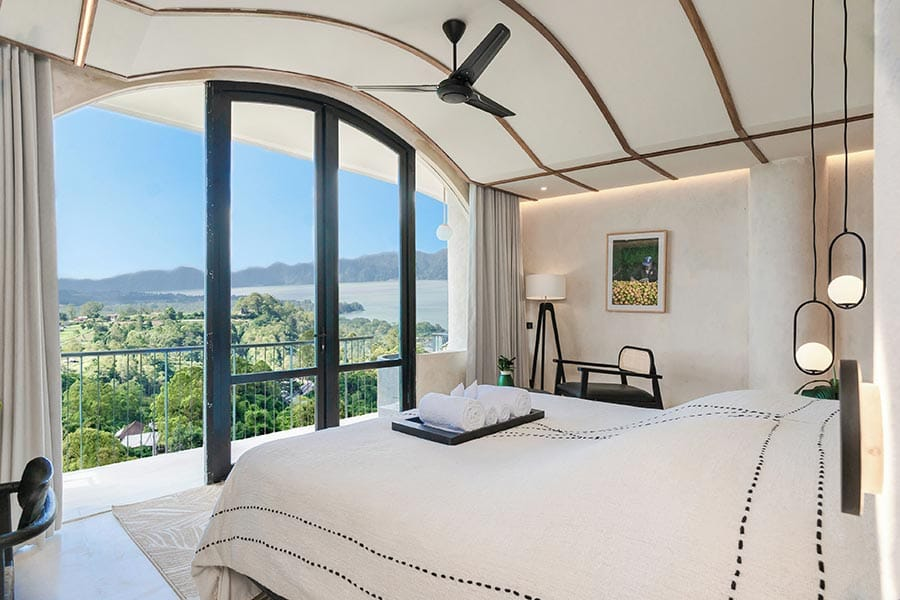
If you enjoy capturing wide mountain scenery, staying overnight at Desa Oculus lets you start the day already close to the Batur landscape. The Panorama Suite is described in more detail at https://desaoculus.com/stay-at-desa-oculus/panorama-suite/.
What Else Can You Do After Your Jeep Tour?
One mistake is treating the jeep ride as the entire Kintamani experience.
The Batur area offers much more than the sunrise viewpoint.
The wider landscape includes Mount Batur, Lake Batur, volcanic calderas, geothermal areas, agricultural land, and communities whose daily lives remain closely connected to the highlands.
After the tour, consider slowing the itinerary down instead of immediately driving back south.
Depending on your interests, the rest of the day can include visiting Lake Batur, relaxing at a natural hot spring, exploring nearby villages, enjoying local food, trying coffee from the Kintamani highlands, visiting other viewpoints, spending time at a spa, or simply returning to your accommodation for breakfast and rest.
This allows the jeep tour to become part of a full Kintamani experience rather than simply an activity completed before driving somewhere else.
If you would like to return to a restful place after the tour, you can Read more about the suite options at Desa Oculus.